Case file — PRJ-007
Afrikelp.
A kelp-based biostimulant producer selling through distributors worldwide, with a platform that has to work in every market.
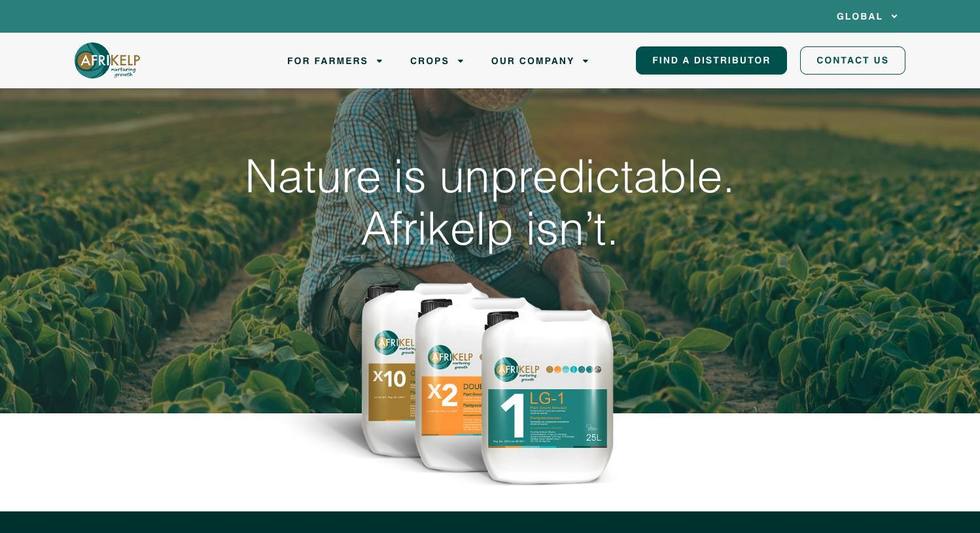
The brief
Afrikelp makes a seaweed biostimulant from sustainably harvested Ecklonia maxima, sold to growers worldwide through a distributor network. The science is the product — root structure, stress resilience, flowering and fruit set — but the buyer might be an almond grower in California or a distributor looking for territory. One page cannot lead with both.
The build
We split the site by audience rather than by product: a route for farmers that leads with crop results, and a route for distributors that leads with territory and supply. Region switching keeps the right claims in front of the right market, and a distributor finder turns an enquiry into a local contact instead of an email into a general inbox.
Scope of work
- S-01WEB DEVELOPMENT
Corporate platform with region switching, built to add markets without rework.
- S-02CONTENT ARCHITECTURE
Two routes — grower and distributor — from one homepage, without splitting the brand.
- S-03DISTRIBUTOR FINDER
Enquiries land with the right local partner rather than a central inbox.
- S-04SEO
Crop-led and territory-led terms, structured per region.
The details that mattered
- Two buyers, one homepage. A grower wants crop outcomes. A distributor wants territory. Both get a route within one screen of arriving.
- Crop-specific, not generic. Results organised by crop — almonds and the rest — because that is how a grower searches and decides.
- The distributor finder does the routing. A global product sold locally needs the enquiry to reach the right person the first time.
- Built to add markets. New regions and registrations slot into the existing structure rather than triggering a rebuild.
Quick answers
What makes a distributor-led site different?
The buyer's next step is a person, not a cart, so the routing to the right distributor leads everything else.
Can the structure grow as we enter new markets?
That was the design constraint: new regions, crops and registrations slot in without rebuilding.